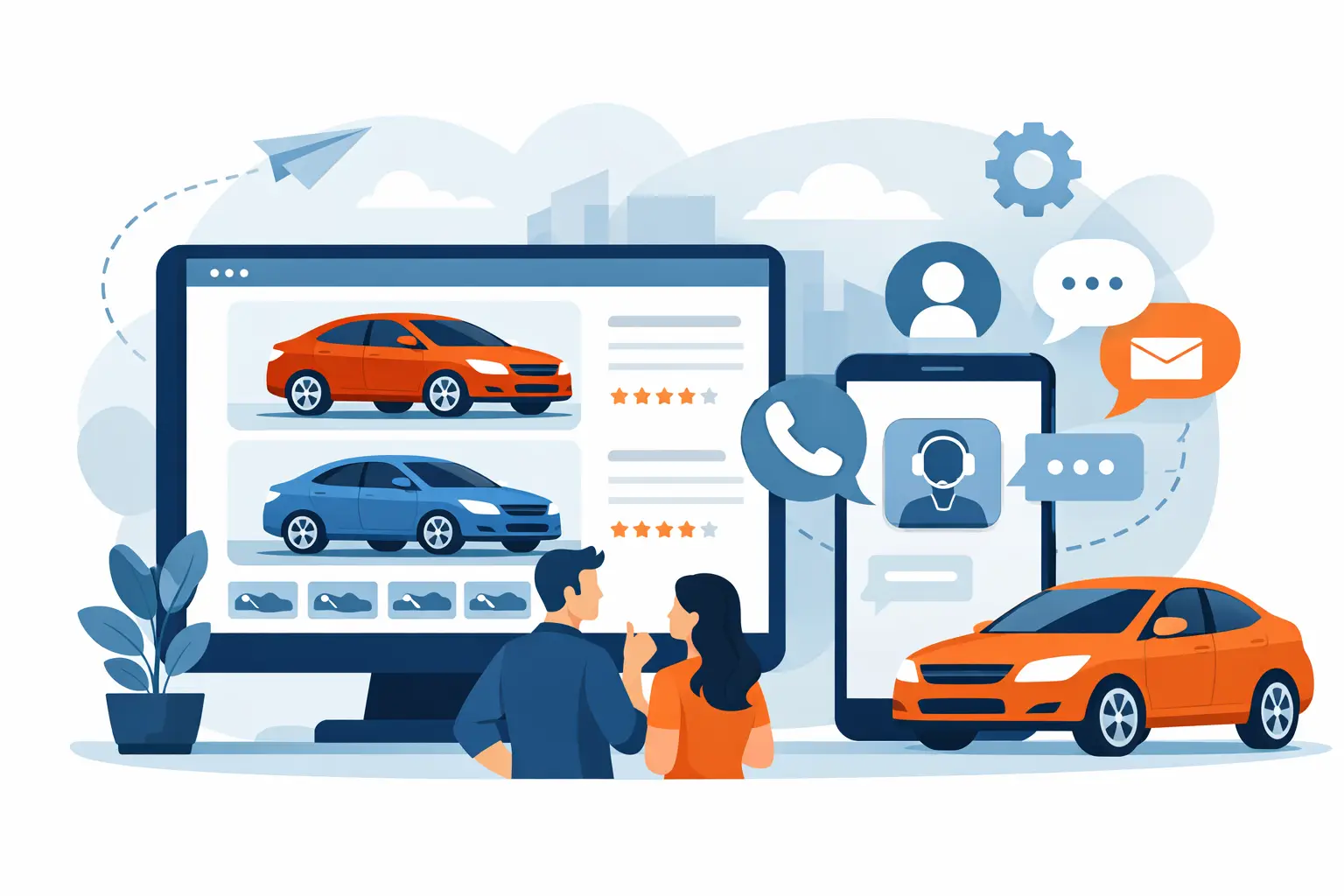
A customer saw an ad on their cell phone, liked a vehicle, and decided to research its dealership before contacting them via WhatsApp. If they find a website for car dealership Slow, with outdated inventory or difficult to navigate, a sale can fall through even before the first contact. For a reseller, the website is not just an institutional presentation: it's the storefront that works every day to transform visits into proposals, test drives, and negotiations.
The central point is simple: your inventory needs to be easy to find, pleasant to browse, and quick to generate contact. This requires more than just a pretty layout. It requires a structure designed for the behavior of car buyers, for Google searches, and for the daily sales routine of your team.
What a car dealership website needs to deliver.
Those looking for a vehicle rarely arrive at the site without an initial idea. They might search by brand, model, price range, year, transmission, mileage, or body type. Therefore, the search tool and inventory filters need to be objective. A visitor should be able to go from a broad search, such as "used automatic SUV," to finding compatible vehicles in just a few taps.
Each car's page also needs to do the work of a good salesperson. Quality photos, organized technical specifications, price, financing options when applicable, standard features, and transparent information reduce doubts. There's no need to hide data to force a call. In practice, clarity improves the quality of the contact and prevents your team from wasting time with basic questions.
The WhatsApp button deserves special attention. It should be visible, but it can't be the only way to contact a customer. Offer forms, options to schedule a visit, and calls to evaluate a trade-in vehicle increase the chances of conversion. Each dealership operates differently: some prioritize immediate service via WhatsApp; others need to distribute leads among salespeople or record everything in a CRM. The website should reflect this reality.
Up-to-date inventory is part of the shopping experience.
Nothing damages trust more than advertising a car that has already been sold. Besides frustrating the customer, an outdated inventory creates noise for the sales team and compromises the perception of the dealership. Ideally, vehicle management should be simple enough for someone on the team to add photos, edit prices, mark a unit as sold, and publish updates without needing a developer for every change.
A well-configured administrative panel provides autonomy for this routine. Training in content management also makes a difference, especially in companies that are still organizing their digital operations. Technology needs to simplify daily tasks, not create a new dependency.
There are two common approaches. A customized website offers greater freedom to organize filters, special pages, integrations, and visual identity. It's suitable for resellers who want a more distinctive digital presence or have specific needs. A subscription plan can be a good choice for getting started quickly and predictably, using resources and layouts already prepared for the sector.
The decision depends on the stage of the business. The cheapest option isn't always the least cost-effective in the long run if it's limited to inventory updates, slows down the website, or hinders campaigns. On the other hand, extensive customization isn't necessary for a smaller operation that needs to quickly launch a good online storefront. The important thing is to choose a solution that can grow with the store.
Mobile speed influences contacts and ads.
A large portion of vehicle searches happens on mobile phones, often between appointments. If photos take too long to load, filters freeze, or buttons are too small, the visitor closes the page and moves on to another dealership. No paid traffic campaign can compensate for a bad experience after the click.
A fast website depends on accommodation, Server configuration, image optimization, well-developed code, and resources like caching are all important factors. Well-configured infrastructures with LiteSpeed, cPanel, PHP, and MariaDB help maintain stable operation. Indicators like Google PageSpeed and GTmetrix are useful for monitoring performance, but they shouldn't be treated as isolated trophies. The real goal is to load the page well for the potential buyer and facilitate conversion.
Responsiveness doesn't just mean "fitting the screen." It means ensuring that photos, specifications, buttons, forms, and menus function comfortably on different screen sizes. A good website should cater to both mobile users and those comparing options on a computer at work or at home.
How to make your inventory appear on Google.
Having published vehicle listings doesn't guarantee visibility. To appear in organic search results, pages need a technical structure for SEO and useful content. This starts with clear titles, organized URLs, proper descriptions, and complete information about each vehicle.
Copying the same description for all cars might seem faster, but it limits the relevance of the pages. A 2022 Chevrolet Onix automatic, for example, deserves a specific presentation, highlighting its unique features, version, maintenance history, and real sales conditions. Besides helping Google understand the page, this provides more security for those comparing options.
Institutional pages are also strategic. An "about the store" section, location information, customer service channels, privacy policy, and content about financing or exchanges help build credibility. For regional retailers, naturally mentioning the cities and regions they serve can strengthen their presence in local searches.
SEO is an ongoing process. A technically prepared website creates the foundation, but the result grows with updated inventory, new pages, content improvements, and analysis of what customers are searching for. If your store invests in advertising, this foundation becomes even more valuable: you reduce your exclusive dependence on paid media and gain your own digital assets.
Leads need to arrive at the sales team in an organized manner.
Receiving many inquiries isn't enough if no one responds quickly or if the salesperson doesn't know which vehicle the interest originated from. Ideally, each form should identify the originating page, the car inquired about, and the information provided by the customer. This way, the interaction begins with context and has a better chance of progressing.
It's also worth defining a simple process. Who receives the lead? What is the expected time for the first response? Will contact be made by phone, WhatsApp, or email? Is the vehicle still available? These questions may seem commercial, but they should be considered during website creation. The best technology loses its effectiveness when the response process is slow.
Integrations with CRM, automation tools, campaign pixels, and analytics platforms can be included according to the reseller's strategy. It's not necessary to install everything at once. For many companies, starting with well-configured forms, WhatsApp, and tracking the origin of contacts already generates concrete progress. Later, the operation can gain layers of automation and segmentation.
Trust is sold before the test drive.
Buying a car involves a high price tag, comparison, and caution. Visitors look for signs that they are dealing with a reputable company. Address, phone number, company registration number (when necessary), real photos of the dealership, reviews, clear policies, and visible contact channels all contribute to this decision.
The visual design should reflect the range of vehicles and the target audience, but without sacrificing navigation. A premium dealership can opt for a more sophisticated presentation; a store focused on fast-moving used cars needs to prioritize price, filters, and speed. In both cases, the website should convey organization and security.
It's also essential to maintain a security certificate, a backup routine, and reliable hosting. These are things that the customer doesn't always see, but they protect the data submitted in forms and prevent the storefront from going offline at a crucial moment.
What to consider before hiring your website.
Before finalizing a project, request a demo of the inventory dashboard and test the navigation on your mobile phone. Ask how vehicle addition will work, if there is post-delivery support, where the website will be hosted, and what integrations are planned. Deadlines, training, and responsibilities for each party should be clear from the start.
Also, verify that the vendor understands that the project doesn't end with publication. A reseller needs someone capable of handling development, hosting, improvements, and, when necessary, actions to generate traffic. Centralizing this operation avoids the hassle of dealing with multiple vendors and reduces the time to resolve problems.
Quick Commerce develops websites for resellers With a focus on performance, responsiveness, SEO, and lead generation, we offer close monitoring and the possibility of delivery within 15 days, depending on the scope and the delivery of necessary materials. The goal is to establish your store within a professional structure without turning technology into a source of worry for the manager.
Your next customer is already comparing cars and dealerships online. When they find a fast, up-to-date, and well-prepared platform ready to serve them, the initial contact ceases to depend on luck and becomes part of a well-structured sales operation. I would like to receive a quote.